Seeding the divide: John Tanton, the Sierra Club and the struggle over US environmentalism

Elcioglu, E. F. (2025). Seeding the divide: John Tanton, the Sierra Club and the struggle over US environmentalism. Race & Class, 0(0). https://doi.org/10.1177/03063968251371957

At the turn of the twenty-first century, the Sierra Club, one of the most prominent environmental organisations in the United States, faced a polarising internal battle over whether to endorse immigration restrictions. Two dominant explanations have emerged to account for why immigration became such a flashpoint in an environmental organisation. One, advanced by watchdog groups like the Southern Poverty Law Center, cast the controversy as a far-right infiltration, a cynical effort to greenwash xenophobia. The other, grounded in critical race and decolonial theory, argued that exclusionary politics have always been an intrinsic part of environmentalism, given its settler-colonial and eugenicist foundations. I offer a third explanation by turning to the 1970s, a pivotal moment when mainstream environmentalism briefly embraced population control as an ecological imperative. Drawing on archival records, I show how this institutional flirtation with population control − though short-lived − created an infrastructure and ideological opening that activists like John Tanton would later exploit. As population control lost mainstream legitimacy due to political backlash and the rise of laissez-faire demographic thinking, Tanton repurposed its ecological language and organisational networks to build an immigration restrictionist movement. I show how he strategically reworked liberal environmentalism to cast racial exclusion as ecological necessity. At the same time, however, the archival record reveals paths not taken, reminding us that environmentalism, like any political project, has always been a terrain of struggle.
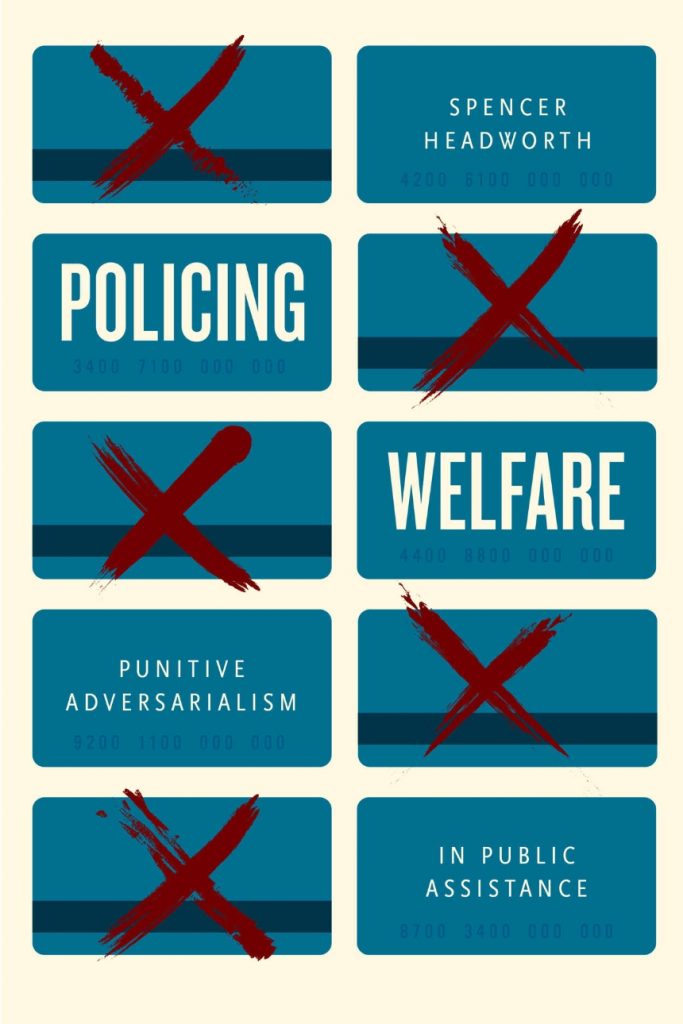
Policing Welfare: Punitive Adversarialism in Public Assistance

Headworth, Spencer. 2021. Policing Welfare: Punitive Adversarialism in Public Assistance. University of Chicago Press.

policing welfare

Means-tested government assistance in the United States requires recipients to meet certain criteria and continue to maintain their eligibility so that benefits are paid to the “truly needy.”  Welfare is regarded with such suspicion in this country that considerable resources are spent policing the boundaries of eligibility, which are delineated by an often confusing and baroque set of rules and regulations.  Even minor infractions of the many rules can cause people to be dropped from these programs, and possibly face criminal prosecution.  In this book, Spencer Headworth offers the first study of the structure of fraud control in the welfare system by examining the relations between different levels of governmental agencies, from federal to local, and their enforcement practices. Policing Welfare shows how the enforcement regime of welfare has been constructed to further stigmatize those already living in poverty and deepens disparities of class, race, and gender in our society.

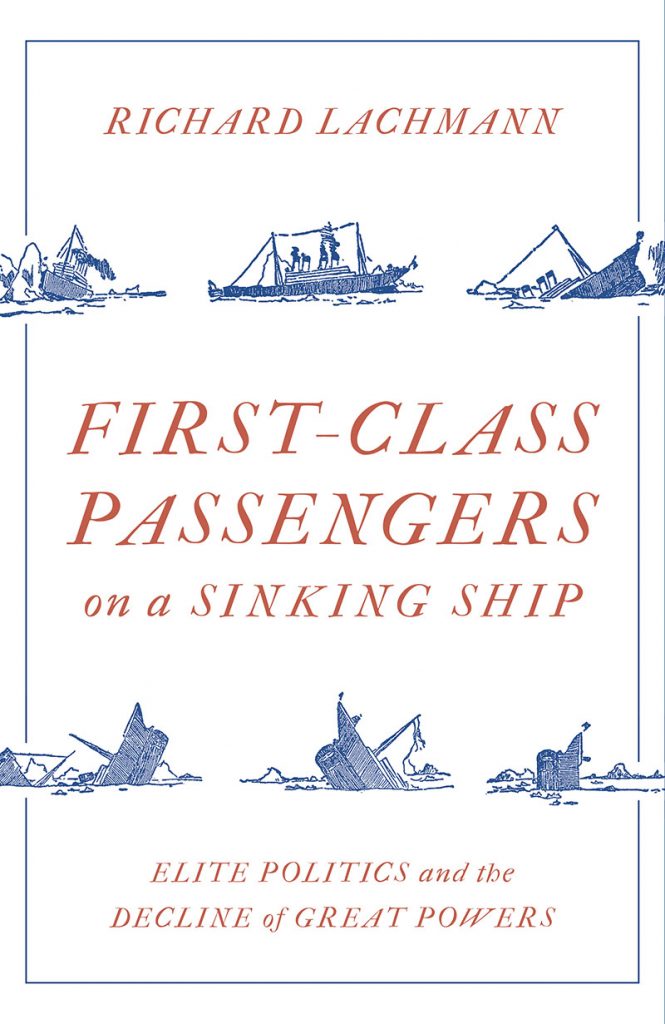
Book Review: First Class Passengers on a Sinking Ship

Please enjoy this review of Richard Lachmann’s First Class Passengers on a Sinking Ship by Emily Erikson.

First Class Passengers

Throw me a life vest, please!

by Emily Erikson, Yale University 

I think we can all agree that Richard Lachmann’s latest book, First Class Passengers on a Sinking Ship, is a masterful work of history and political analysis. The question I want to address is whether this book should be read as an analysis of the current situation of the United States, a work on elite conflict theory, or as a work on imperial decline? Or perhaps this question could be better phrased as whether this work’s greatest contribution is to contemporary analysis of the state of the United States, to the development of elite-conflict theory, or to theories of empire. 

American Fault Lines and a Silver Lining

by Jonathan J.B. Mijs, Harvard University

The pandemic has had an uneven impact across the U.S. — exacerbating existing inequalities and creating new political challenges. The following are three American fault lines laid bare by the coronavirus, and one silver lining.

1. For millions of Americans, staying at home is a luxury they cannot afford. The comfort and well-being of all Americans depends on grocery clerks, delivery drivers and factory workers putting their own safety second. While the upper middle classes take their work with them, working and middle class Americans are tethered to their jobs: Bureau of Labor Statistics (2018) show that 52 percent of college-educated people can work from home, as compared to just 12 percent of workers with a high school degree, and 4 percent of those without. The same line cuts across race. White Americans are twice as likely as African Americans or Latinos to have the option to work remotely. The coronavirus highlights just one dimension of the increasingly polarized U.S. labor market that offers high compensation and autonomy to a lucky few, and precarious employment for the rest, marked by low-wages, little to no benefits, and a lack of control or security.

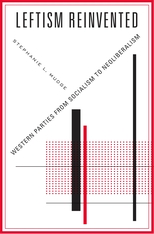
Book Forum: Leftism Reinvented by Stephanie Mudge

In the spotlight is Leftism Reinvented Western Parties from Socialism to Neoliberalism by Stephanie Mudge. Keep reading for three insightful reviews on her 2018 book by Thomas Janoski, Gabriel Chouhy Algorta, and Jeff Stilley. Leftism Reinvented

Is it the Left or the Right that We Should be Focused On or Both? Review of Stephanie Mudge’s Leftism Reinvented

by Thomas Janoski, University of Kentucky


Two major books and a third have come out in the area of comparative political sociology in the last two years. Stephanie Mudge’s Leftism Reinvented: Western Political Parties from Socialism to Neoliberalism (2018, Harvard University Press) and Daniel Ziblatt’s Conservative Parties and the Birth of Democracy (2017, Cambridge University Press) followed by Sten Levity and Daniel Ziblatt’s How Democracies Die (2018, Crown Publishing of Penguin).[1] Mudge follows social democratic, labor and democratic (US) parties in three periods: socialism (1900 to 1929 but centered on 1920), Keynesian revolution (1930 to 1974 but centered on 1960), and ‘left’ neoliberalism (1975 to 2005 centered around 1995).