Believing in Light After Darkness: Displacement and Refugee Resettlement

Fee, Molly. 2026. Believing in Light After Darkness: Displacement and Refugee Resettlement. University of California Press.
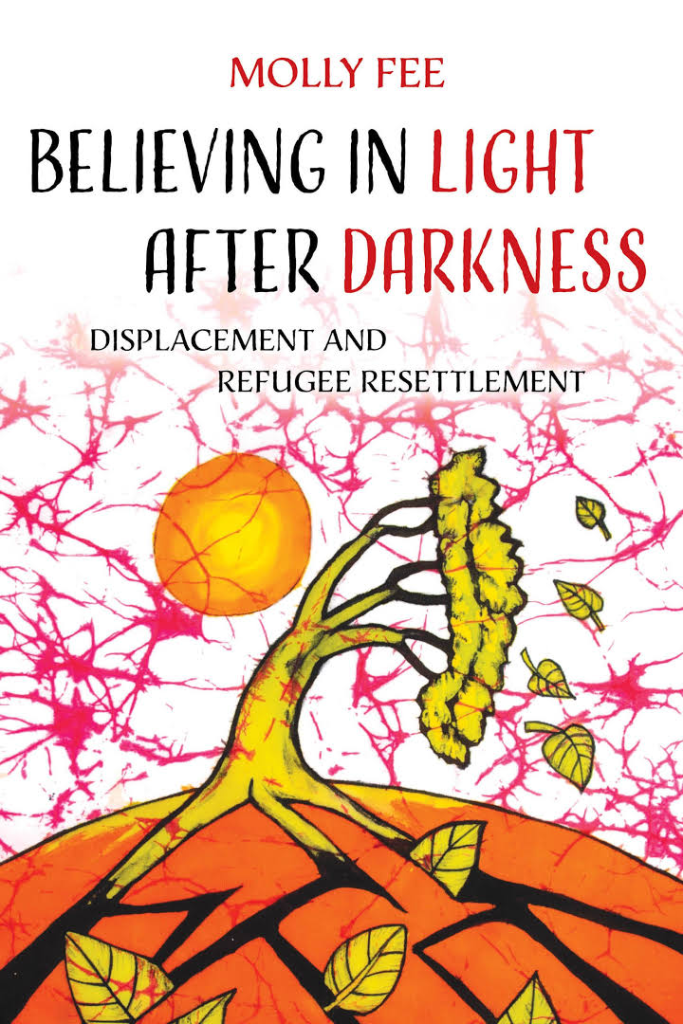
War, persecution, and climate change too often force people from their homes and across borders. Most remain in difficult conditions in neighboring countries. The less than one percent of refugees offered resettlement to a different country gain an alternative path forward, with access to specialized supports and services that are traditionally understood as a solution to displacement and a program of integration. Examining the complexities of refugees’ lived experiences, Molly Fee’s deeply humanistic ethnography reframes resettlement as a period of disruption and disorientation, when newly arrived refugees must navigate the rules and expectations of a new country. For those who have already rebuilt their lives numerous times, resettlement becomes yet another uprooting. Believing in Light after Darkness reveals how humanitarian solutions, though well intentioned, do not immediately resolve the conditions of displacement.

Defending Critical Epistemology: The Case of Christian Nationalism and Christofascism

Foertsch, Steven. 2025. “Defending Critical Epistemology: The Case of Christian Nationalism and Christofascism.” 2025. Sociological Forum, 0(0):1-5. https://doi.org/10.1111/socf.70044

Christian nationalism and Christofascism theorists have surrendered the discursive floor to their empiricist critics. A flurry of recent research has asserted that critical paradigms within the sociology of religion are ideologically committed and empirically invalid. In this reply to Jesse Smith’s “Old Wine in New Wineskins” (2024), I contend several things: (1) Christian nationalism and Christofascism research is based in empirical validity, (2) claims of “conceptual slippage” are irrelevant given the sociopolitical context, (3) rejection of the critical perspective reifies the unjust power structure through a normative appeal to rational-legal scientific authority, and (4) critical epistemology in the sociology of religion remains a crucial tool in combating authoritarian slippage. It is my hope that this reply sparks further reflection and debate on the role of sociology and the nature of sociological praxis.

Moral Scripts in Prosecutorial Decision-Making: The Interplay Between Self and Others

Alex, H. Moral Scripts in Prosecutorial Decision-Making: The Interplay Between Self and Others. Qual Sociol (2026). https://doi.org/10.1007/s11133-025-09627-8

This article analyzes the decision-making process of legal actors through an interactionist perspective. Based on interviews from Cook County, Illinois, I show how state attorneys utilize a moral script characterized by three key elements in handling cases: responsibility, proactiveness, and responsiveness. These state attorneys rely on this model not only to justify giving leniency in plea deals, but also when describing their own actions. The reported entanglement between self and others leads the attorneys to be less willing to grant mercy in cases where the self cannot be extended to others through role-taking prompted by social interaction. This study advances courtroom research by demonstrating that perceptions of deservingness are shaped by interpretive and moral factors that transcend fixed demographic categories.


Moral Intuitions and Support for Immigration

Iceland, J., E.Silver, and I. E.Atac. 2026. “Moral Intuitions and Support for Immigration.” Social Science Quarterly107, no. 2: e70146. https://doi.org/10.1111/ssqu.70146

Attitudes toward immigration are often shaped by whether immigrants are perceived as a threat to one’s racial, ethnic, or nativity group status. Yet recent research shows that such perceptions vary not only between different groups but also within them. Drawing on Moral Foundations Theory, our study investigates the moral intuitions that lead some individuals to view immigrants as threats and others to see them as deserving of care and support.

Managing Corporate Virtue: The Politics of Workplace Diversity in New York and Paris

Bereni, Laure, , Managing Corporate Virtue: The Politics of Workplace Diversity in New York and Paris (New York, NY
, 2025; online edn, Oxford Academic, 22 Sept. 2025), https://doi.org/10.1093/9780197785768.002.0004

A major tenet of contemporary capitalism holds that what is good for business can align with what is good for society. Efforts toward more diverse, equitable, and inclusive workplaces epitomize this rising ideology, termed responsible capitalism. An increasingly common managerial mantra is “diversity means business.” But how does it play out in the daily life of organizations? Drawing on interviews with diversity managers, a historical review of practitioner literature, and observations from organizations in New York City and Paris, Managing Corporate Virtue goes beyond the rhetoric of diversity initiatives to uncover the concrete challenges faced by those tasked with implementing them. This book reveals the persistent fragility of diversity efforts, which are often sidelined; subject to the variations of the legal, social, and political environment; and require constant efforts to sustain managerial support. Practitioners must prove their programs are neither merely virtue signaling nor the Trojan horse of political, legal, or moral pressures that would unsettle the corporate order. Ultimately, by exploring the day-to-day work of diversity managers in the United States and France, the book exposes the contradictions lurking beneath the neoliberal promise of harmony between profit and virtue.