Two-layer panopticon: how the Chinese government uses digital surveillance to prevent collective action

Han Zhang, Two-layer panopticon: how the Chinese government uses digital surveillance to prevent collective action, Social Forces, 2025;, soaf194, https://doi.org/10.1093/sf/soaf194

Authoritarian regimes increasingly use digital surveillance to suppress collective action. Existing accounts emphasize how dictators use mass surveillance of citizens to gather information and deter mobilization, but overlook their continued reliance on human agents, whose shirking often undermines repression. We propose a two-layer Panopticon framework for digital surveillance. Dictators can directly surveil citizens. They can also surveil the frontline agents responsible for implementing repression, reducing shirking and improving prevention. We test this framework in China using an original dataset of 51,611 government procurement contracts that captures digital workplace surveillance of agents alongside mass surveillance of citizens. We find that each layer independently reduces protest and that their interaction produces modestly reinforcing effects. Causal mediation analysis reveals an asymmetric mechanism: about one-third of the protest-reducing effect of citizen surveillance operates through increased oversight of agents, while agent-facing surveillance reduces protest directly. These results remain robust across dynamic panel models, instrumental variables, and alternative protest data. This article bridges and extends research on state repression, principal–agent problems in bureaucracy, and digital authoritarianism, offering new theoretical and empirical insights into how digital technologies strengthen the practice of authoritarian rule.
The wages of ethnic power: Socioeconomic status, group threat, and anti-immigrant attitudes in Western Europe

Atac, I. E., Seguin, C., & Gorman, B. (2025). The wages of ethnic power: Socioeconomic status, group threat, and anti-immigrant attitudes in Western Europe. International Journal of Comparative Sociology, 0(0).

Group threat theories explain anti-immigrant attitudes as emerging from threats to the perceived or actual power of one’s ethnic group. Studies also show that individual-level socioeconomic status (SES) is negatively correlated with attitudes toward immigrants, where SES is often conceptualized as an individual-level variable which relates to an individual’s experience of economic competition or general political orientation. Here we argue that the effect of SES is conditional on an individual’s ethnic group’s power. Using data from the European Social Survey and Ethnic Power Relations datasets, we examine how interactions between ethnic group power and individual SES shape attitudes toward immigrants across 16 Western European countries. We find that majority group members generally exhibit more anti-immigrant attitudes than members of minority groups. SES is negatively correlated with anti-immigrant attitudes, generally, but especially for majority group members, where lower-SES individuals have the most anti-immigrant attitudes. At the highest levels of SES there are almost zero differences in anti-immigrant attitudes between majority and minority group members. Our results highlight the need to look to how the “psychological wages” of ethnic group power are influenced by individual SES.

Two Steps Forward, One Step Back: Political Mobilization and Policy Reform in Québec

Eidlin, B., & Guay, E. (2025). Two Steps Forward, One Step Back: Political Mobilization and Policy Reform in Québec. Labour Le Travail96, 67–92. https://doi.org/10.52975/llt.2025v96.006

Québec enacted major solidaristic family and housing policy reforms toward the end of the 1990s, precisely when other countries were moving toward more individualized policies. Against what existing theories would predict, these reforms took place at a moment when labour’s power had weakened, the ruling left party had scaled back its progressive commitments, and employers opposed the proposed reforms. Why did Québec expand its social policies in a broader context of retrenchment? We argue that this resulted from a shift in the context of contention that sparked a process of institutional conversion. First, labour-allied progressive movements in the province were able, through their own cycle of mobilization, to fill the gap left by unions’ retreat from direct action and mass mobilization from the 1980s onwards. Second, employers remained relatively weak and state-dependent, leading them to accept the government’s agenda as long as it did not differ significantly from their priorities of deficit and tax reduction. Third, the idea of the “social economy” served as a floating signifier in the province’s public policy debates of the 1990s, providing a framework within which unions, community groups, employers, and the government could operate while assigning it different definitions and aims. The ambiguity of the idea of the social economy helped to forge a disparate coalition of Québec social actors, resulting in solidaristic policy reforms. Our analysis aligns with recent literature calling for a renewed attention to the role played by contention in the development of social policies in Québec.

Anti-leftism as an aesthetic in white power punk

Katz, N. (2025). Anti-leftism as an aesthetic in white power punk. Social Movement Studies, 1–16. https://doi.org/10.1080/14742837.2025.2595346

White Power music scenes embrace both White Supremacy and the music cultures they situate themselves in. For White Power punk scenes, there is a reliance on the shaping and utilization of punk aesthetics to support their ideology. This paper examines how members of White Power punk bands in the United States and Germany utilize White Supremacist ideals and punk aesthetics to construct their scenes. The findings show that both the German and U.S. scenes emphasize an opposition to leftism as a core aesthetic. Opposing leftism serves as a driving aesthetic in three ways: it allows members to make sense of their music scenes, helps them create an ideological position that links music scenes together, and provides a discursive tool to connect their scenes with larger social issues.

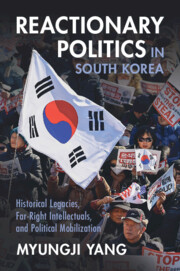
Reactionary Politics in South Korea: Historical Legacies, Far-Right Intellectuals, and Political Mobilization

Yang, M. (2025). Reactionary Politics in South Korea: Historical Legacies, Far-Right Intellectuals, and Political Mobilization. Cambridge: Cambridge University Press.

In December 2024, South Korean president Yoon Seok-yeol stunned the world by declaring martial law. More puzzling was that Yoon’s insurrection unexpectedly gained substantial support from the ruling right-wing party and many citizens. Why do ordinary citizens support authoritarian leaders and martial law in a democratic country? What draws them to extreme actions and ideas? With the rise of illiberal, far-right politics across the globe, Reactionary Politics in South Korea provides an in-depth account of the ideas and practices of far-right groups and organizations threatening democratic systems. Drawing on eighteen months of field research and rich qualitative data, Myungji Yang helps explain the roots of current democratic regression. Yang provides vivid details of on-the-ground internal dynamics of far-right actors and their communities and worldviews, uncovering the organizational and popular foundations of far-right politics and movements.