Social conflict on the front lines of reform: Institutional activism and girls’ education in rural India

Mangla, Akshay. 2021. “Social conflict on the front lines of reform: Institutional activism and girls’ education in rural India.Public Administration and Development. https://doi.org/10.1002/pad.1959.

How do states realize social reforms for marginalized groups in settings of entrenched inequality? This article argues that reform implementation is a conflict-ridden process driven by the institutional activism of street-level bureaucrats. Through an ethnographic case study of Mahila Samakhya, a novel government program for women’s empowerment in Uttar Pradesh, India, I find that local fieldworkers committed to reform promoted girls’ education by mobilizing marginalized citizens and mediating local conflicts. Organizational processes of gender-based training and deliberation enabled fieldworkers to challenge village patriarchy and exclusion and forge programmatic ties with lower caste women. By altering rules to address the practical needs of households, fieldworkers effectively integrated disadvantaged girls into the education system. Institutional activism also engendered conflicts over rules within the bureaucracy, prompting senior officials to advocate for marginalized groups. The findings suggest that institutional commitment to activism is critical for agencies working on the front lines of reform.
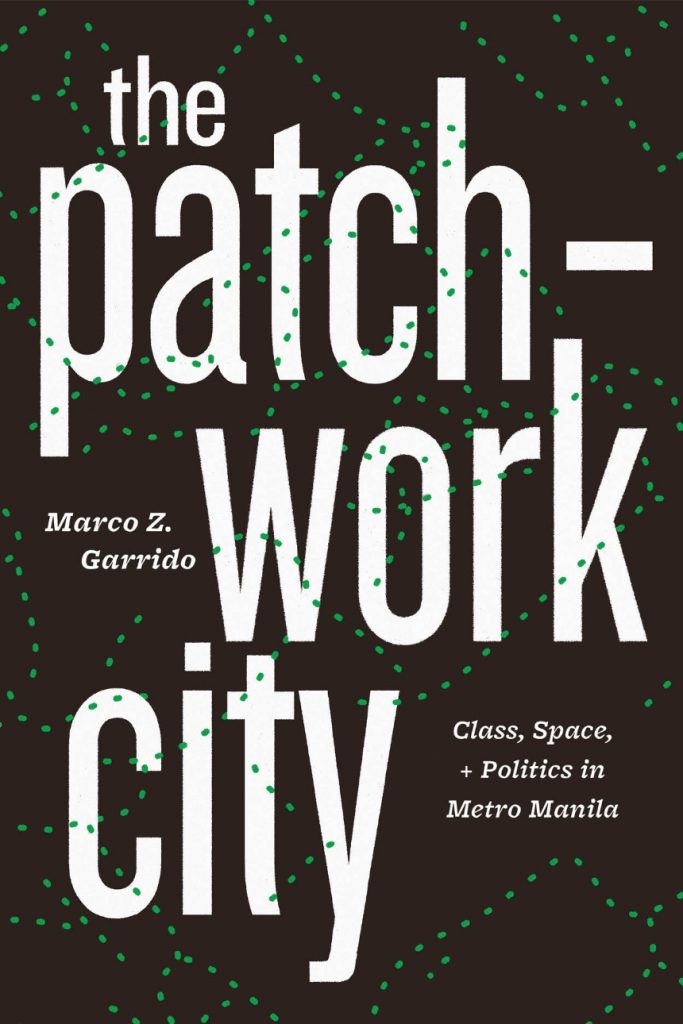

The Patchwork City: Class, Space, and Politics in Metro Manila

Garrido, Marco Z. 2019. The Patchwork City: Class, Space, and Politics in Metro Manila.

Patchwork City

In contemporary Manila, slums and squatter settlements are peppered throughout the city, often pushing right up against the walled enclaves of the privileged, creating the complex geopolitical pattern of Marco Z. Garrido’s “patchwork city.” Garrido documents the fragmentation of Manila into a mélange of spaces defined by class, particularly slums and upper- and middle-class enclaves. He then looks beyond urban fragmentation to delineate its effects on class relations and politics, arguing that the proliferation of these slums and enclaves and their subsequent proximity have intensified class relations. For enclave residents, the proximity of slums is a source of insecurity, compelling them to impose spatial boundaries on slum residents. For slum residents, the regular imposition of these boundaries creates a pervasive sense of discrimination. Class boundaries then sharpen along the housing divide, and the urban poor and middle class emerge not as labor and capital but as squatters and “villagers,” Manila’s name for subdivision residents. Garrido further examines the politicization of this divide with the case of the populist president Joseph Estrada, finding the two sides drawn into contention over not just the right to the city, but the nature of democracy itself.

Q&A with Kiyoteru Tsutsui

Co-Winner of the 2019 Political Sociology Book Award

Rights Makes Might: Global Human Rights and Minority Social Movements in Japan (Oxford University Press, 2018)

Rights Make Might

How did you start working on the book and how did the project evolve over time?

The book project started as a follow-up to a series of articles that I’d worked on since my dissertation, which examined how ideas and institutions around universal human rights emerged and evolved since around the 1940s. These articles featured cross-national quantitative analyses that identified some interesting global-local dynamics in human rights politics: many states make discursive commitments to human rights without actually changing their practices, and only when civil society actors leverage those commitments do actual practices improve. Other researchers also confirmed this pattern, and I had some anecdotal evidence to underscore the argument, but I wanted to have a deeper understanding about how these processes unfold. So I set out to do a comparative case study, and the three cases in Japan offered an excellent setting for this process-tracing study.

Book Forum: Leftism Reinvented by Stephanie Mudge

In the spotlight is Leftism Reinvented Western Parties from Socialism to Neoliberalism by Stephanie Mudge. Keep reading for three insightful reviews on her 2018 book by Thomas Janoski, Gabriel Chouhy Algorta, and Jeff Stilley. Leftism Reinvented

Is it the Left or the Right that We Should be Focused On or Both? Review of Stephanie Mudge’s Leftism Reinvented

by Thomas Janoski, University of Kentucky


Two major books and a third have come out in the area of comparative political sociology in the last two years. Stephanie Mudge’s Leftism Reinvented: Western Political Parties from Socialism to Neoliberalism (2018, Harvard University Press) and Daniel Ziblatt’s Conservative Parties and the Birth of Democracy (2017, Cambridge University Press) followed by Sten Levity and Daniel Ziblatt’s How Democracies Die (2018, Crown Publishing of Penguin).[1] Mudge follows social democratic, labor and democratic (US) parties in three periods: socialism (1900 to 1929 but centered on 1920), Keynesian revolution (1930 to 1974 but centered on 1960), and ‘left’ neoliberalism (1975 to 2005 centered around 1995).

Trade Battles: Activism and the Politicization of International Trade Policy

Kay, Tamara and R.L. Evans. 2019. Trade Battles: Activism and the Politicization of International Trade Policy. New York: Oxford University Press.

Trade BattlesTrade was once an esoteric economic issue with little domestic policy resonance. Activists did not prioritize it, and grassroots political mobilization seemed unlikely to free trade advocates. The passage of the North American Free Trade Agreement in the early 1990s was therefore expected to be a fait accompli. Yet, as Trade Battles shows, activists pushed back: they increased the public consciousness on trade, mobilized new constituencies against it, and demanded that the rules of the global economy protect the collective rights and common good of citizens. Activists also forged a sustained challenge to U.S. trade policies after NAFTA, setting the stage for future trade battles.

Using data from extensive archival materials and over 215 interviews with Mexican, Canadian, and U.S. trade negotiators; labor and environmental activists; and government officials, Tamara Kay and R.L. Evans assess how activists politicized trade policy by leveraging broad divisions across state and non-state arenas. Further, they demonstrate how activists were not only able to politicize trade policy, but also to pressure negotiators to include labor and environmental protections in NAFTA’s side agreements. A timely contribution, Trade Battles seeks to understand the role of civil society in shaping state policy. Order online at www.global.oup.com with promotion code ASFLYQ6 to save 30%