Environments of Disbelief: Serbian Youth, Conspiracy Theory, and Practices of Digital Distrust

Brandt, E.E.S. Environments of Disbelief: Serbian Youth, Conspiracy Theory, and Practices of Digital Distrust. Qual Sociol 48, 637–663 (2025). https://doi.org/10.1007/s11133-025-09610-3

Conspiracy theories are often understood as resulting from a lack of proper skepticism or an inability to approach narratives critically. This paper argues that we should instead see conspiracy theories as resulting from an excess of skepticism. Interviews with Serbian youth show how conspiracism coincides with other skeptical media practices, including fact-checking with Google, averaging for objectivity, and a preference for unmediated information. Living in an environment of disbelief, where institutions and official narratives cannot be trusted, young Serbians deploy conspiracy theories and related skeptical media practices as methods of political and social critique. More generally, this case study demonstrates the need for scholars to focus on conspiracy theories as part of a broader repertoire of media consumption practices characteristic of environments, rather than as pathologies of individuals.

Resisting Democratic Backsliding From Within the State: Environmental Politics in Bolsonaro’s Brazil

Dias, V. M., and M. G.Schapiro. 2026. “Resisting Democratic Backsliding From Within the State: Environmental Politics in Bolsonaro’s Brazil.” Policy Studies Journal1–16. https://doi.org/10.1111/psj.70101.

This article explores how polycentric governance systems can facilitate resistance to democratic erosion from within the state, bridging two lines of research: polycentricity and democratic backsliding. Such resistance materializes through three key mechanisms within polycentric arrangements: decentralized political discretion, bureaucratic autonomy, and institutional capacity. In conducting a critical event analysis of environmental politics in Brazil, we analyze the actions of the Brazilian Central Bank, the Supreme Court, and a consortium of Amazonian governors. Although these entities do not have specific environmental mandates, their varying degrees of discretion, autonomy, and capacity enabled them to resist antidemocratic measures targeting environmental policies while fragmenting authoritarian presidential power. By examining how the combination of these three elements influenced the levels of resistance to democratic backsliding in Brazil, our findings illuminate both the challenges and promises of polycentric governance systems in promoting democratic deliberation in policy-making within democracies under threat.

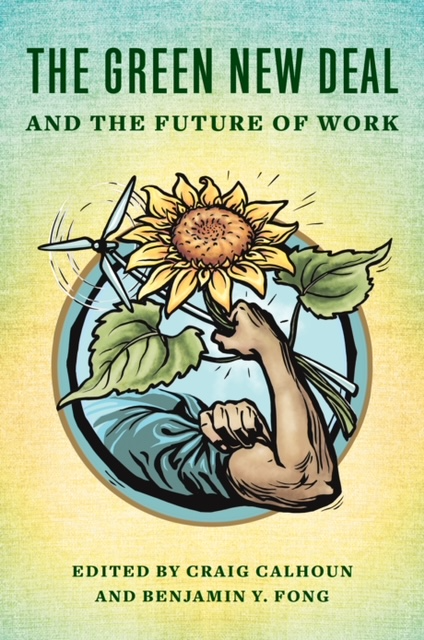
The Green New Deal and the Future of Work

Calhoun, Craig and Benjamin Fong. 2022. The Green New Deal and the Future of Work.  Columbia University Press.

green new deal

Catastrophic climate change overshadows the present and the future. Wrenching economic transformations have devastated workers and hollowed out communities. However, those fighting for jobs and those fighting for the planet have often been at odds. Does the world face two separate crises, environmental and economic? The promise of the Green New Deal is to tackle the threat of climate change through the empowerment of working people and the strengthening of democracy. In this view, the crisis of nature and the crisis of work must be addressed together—or they will not be addressed at all.