Civic Gifts: Voluntarism and the Making of the American Nation-State

Clemens, Elizabeth. 2020. Civi Gifts: Voluntarism and the Making of the American Nation-State. University of Chicago Press.
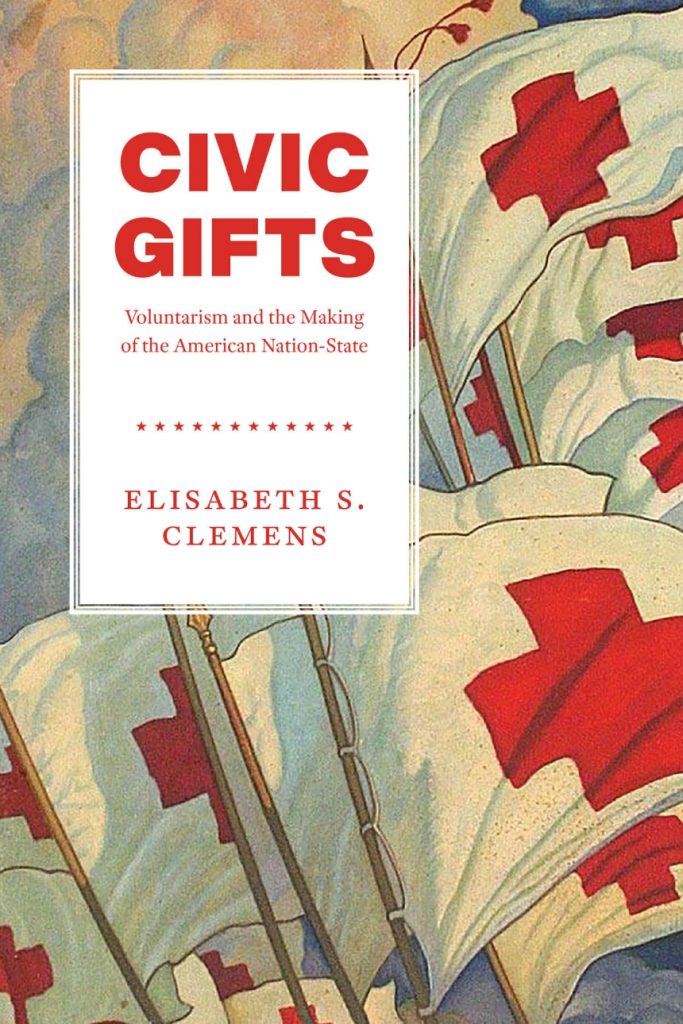
Civic Gifts

In Civic Gifts, Elisabeth S. Clemens takes a singular approach to probing the puzzle that is the United States. How, she asks, did a powerful state develop within an anti-statist political culture? How did a sense of shared nationhood develop despite the linguistic, religious, and ethnic differences among settlers and, eventually, citizens? Clemens reveals that an important piece of the answer to these questions can be found in the unexpected political uses of benevolence and philanthropy, practices of gift-giving and reciprocity that coexisted uneasily with the self-sufficient independence expected of liberal citizens Civic Gifts focuses on the power of gifts not only to mobilize communities throughout US history, but also to create new forms of solidarity among strangers. Clemens makes clear how, from the early Republic through the Second World War, reciprocity was an important tool for eliciting both the commitments and the capacities needed to face natural disasters, economic crises, and unprecedented national challenges. Encompassing a range of endeavors from the mobilized voluntarism of the Civil War, through Community Chests and the Red Cross to the FDR-driven rise of the March of Dimes, Clemens shows how voluntary efforts were repeatedly articulated with government projects.  The legacy of these efforts is a state co-constituted with, as much as constrained by, civil society.
The New Handbook of Political Sociology

Janoski, Thomas, De Leon, Cedric, Misra, Joya, & Martin, Isaac William. (Eds.). 2020. The New Handbook of Political Sociology. Cambridge: Cambridge University Press.

New Handbook of Political Sociology

How will political sociology help us discern and analyze such changes now and in the next few decades? The future of politics is as uncertain as ever, but a brief overview of the history of political sociology may offer some clues to the theoretical challenges and opportunities ahead. For convenience, we divide the recent history of political sociology into three periods, suggesting that the field is now entering a fourth period with an expanding focus.

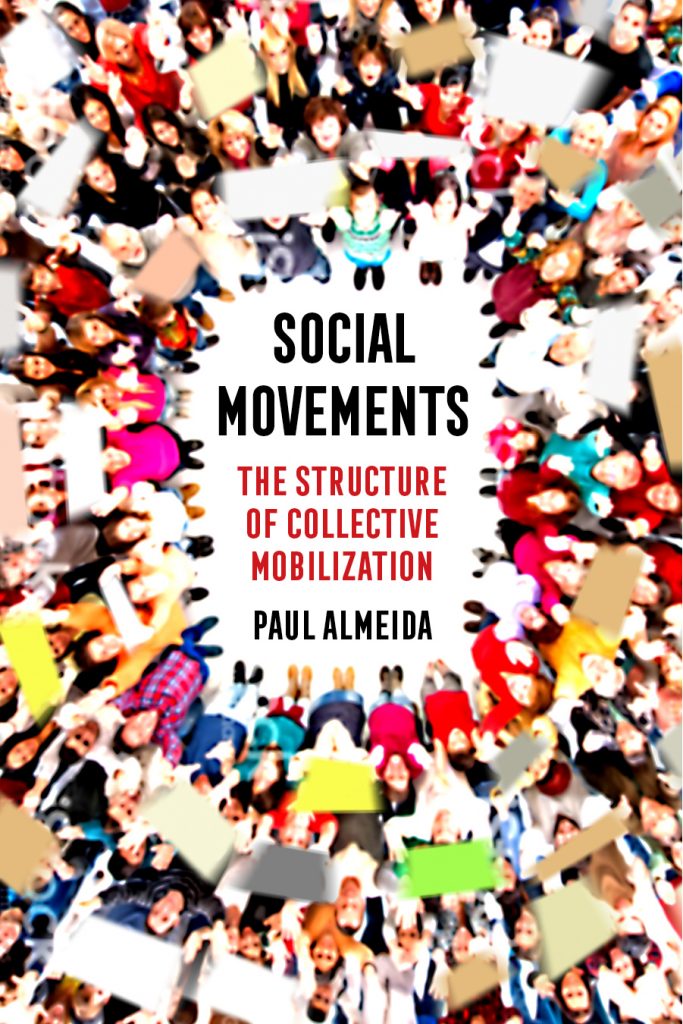
Social Movements: The Structure of Collective Mobilization

Almeida, Paul. 2019. Social Movements: The Structure of Collective Mobilization. University of California Press.

Social Movements the Structure of Collective Mobilization

Social Movements cleverly translates the art of collective action and mobilization by excluded groups to facilitate understanding social change from below. Students learn the core components of social movements, the theory and methods used to study them, and the conditions under which they can lead to political and social transformation.

This fully class-tested book is the first to be organized along the lines of the major subfields of social movement scholarship—framing, movement emergence, recruitment, and outcomes—to provide comprehensive coverage in a single core text.

Power in Modernity: Agency Relations and the Creative Destruction of the King’s Two Bodies

Reed, Isaac Ariail. 2020. Power in Modernity: Agency Relations and the Creative Destruction of the King’s Two Bodies. Chicago, IL: Chicago University Press.

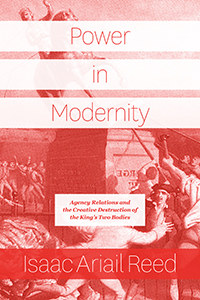
Power in Modernity

In Power in Modernity, Isaac Ariail Reed proposes a bold new theory of power that describes overlapping networks of delegation and domination.  Chains of power and their representation, linking together groups and individuals across time and space, create a vast network of intersecting alliances, subordinations, redistributions, and violent exclusions. Reed traces the common action of “sending someone else to do something for you” as it expands outward into the hierarchies that control territories, persons, artifacts, minds, and money.

Women Rising: In and Beyond the Arab Spring

Stephan, Rita and Mounira M. Charrad, eds., 2020. Women Rising: In and Beyond the Arab Spring, New York: New York University Press.

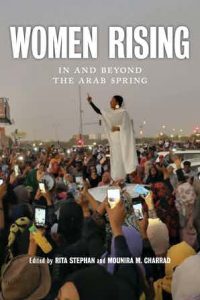
Women Rising

Women Rising brings together groundbreaking essays by female activists and scholars documenting women’s resistance before, during, and after the Arab Spring. In this timely volume, Stephan and Charrad paint a picture of women’s first-hand experiences in sixteen countries. Contributors provide insight into a diverse range of perspectives across the entire movement, focusing on often marginalized voices, including rural women, housewives, students, and artists. Women Rising offers an in-depth understanding of an important twenty-first century movement, telling the story of Arab women’s activism.