Piketty and Patrimonialism: A Frankfurt School Critique of Piketty’s Use of Marx, Weber, Political Economy, and Comparative Historical Sociology

Bakker, J.I. 2019. “Piketty and Patrimonialism: A Frankfurt School Critique of Piketty’s Use of Marx, Weber, Political Economy, and Comparative Historical Sociology.” Chapter in Lauren Langman and David A Smith, eds. Twenty-First Century Inequality and Capitalism: Piketty, Marx, and Beyond (Studies in Critical Social Sciences). Brill.

Bakker develops a detailed historical argument (that also reflects on contributions of various Frankfurt School luminaries) and sees in Piketty, for all the empirical riches, a relative theoretical poverty, with the lack of attention to imperialism/colonialism, plus his failure to link the “baronial” influence of the modern day patrimonial elites to any form of class analysis.

Blumer, Weber, Peirce, and the Big Tent of Semiotic Sociology: Notes on Interactionism, Interpretivism, and Semiotics

Bakker, J.I. 2023. “Blumer, Weber, Peirce, and the Big Tent of Semiotic Sociology: Notes on Interactionism, Interpretivism, and Semiotics.” Chapter in Fontdevila, Jorge and Andrea Cossu eds, Interpretive Sociology and the Semiotic Imagination. Bristol University Press, 2023. Project MUSE muse.jhu.edu/book/112239.

This chapter proposes to refine the symbolic interactionist project by incorporating Peircean semiotics and neo-​ Weberian interpretation. Symbolic interactionism appears to have forgotten key sources of its American pragmatist roots. Peirce’s indirect influence on Mead and Blumer, for instance, is often undertheorized but should be made central to the foundational narratives of symbolic interactionism. This calls for more sophisticated understandings of meaning-​ making that incorporate Peirce’s semiotic triadic model and classifications of signs where symbols are just one kind of signs among others. Here, I take on these matters and expand on my pragmatic sociology (Bakker, 2011a) to introduce the emergent project of a semiotic sociology. In stepwise fashion, I lay foundations of a metaparadigmatic synthesis—​ a “big tent”—​ based on five key arguments that build upon each other, including Blumer as its anchor point, American symbolic interactionism, global interactionism, neo-​ Weberian interpretive analysis for cross-​ historical comparison, and Peircean semiotics as the culminating paradigm that pulls it all together. The Cold War is over (Menand, 2021).

Standardizing the World: EU Trade Policy and the Road to Convergence

Duina, Francesco and Crina Viju-Miljusevic. 2023. Standardizing the World: EU Trade Policy and the Road to Convergence. Oxford University Press.

The EU has pursued many trade pacts across the world. This is part of its foreign policy: as the third largest economy in the world and lacking hard power, the EU relies on trade agreements to project its interests. These are often complex and far-reaching initiatives that have the potential to shape not only economic but also political and social life in the EU and its trading partners.

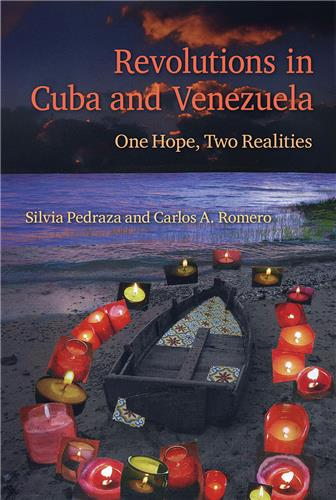
Revolutions in Cuba and Venezuela: One Hope, Two Realities

Pedraza, Silvia and Carlos A. Romero. 2023. Revolutions in Cuba and Venezuela: One Hope, Two Realities. University of Florida Press.

revolutions in cuba and venezuela

Revolutions in Cuba and Venezuela compares the sociopolitical processes behind two major revolutions-those of Cuba in 1959, when Fidel Castro came to power, and Venezuela in 1999, when Hugo Chávez won the presidential election. With special attention to the Cuba-Venezuela alliance, particularly in regards to foreign policy and the trade of doctors for oil, Silvia Pedraza and Carlos Romero show that the geopolitical theater where these events played out determined the dynamics and reach of the revolutions.
 
Updating and enriching the current understanding of the Cuban and Venezuelan revolutions, this study is unique in its focus on the massive exoduses they generated. Pedraza and Romero argue that this factor is crucial for comprehending a revolution’s capacity to succeed or fail. By externalizing dissent, refugees helped to consolidate the revolutions, but as the diasporas became significant political actors and the lifelines of each economy, they eventually served to undermine the social movements.
 
Using comparative historical analysis and data collected through fieldwork in Cuba and Venezuela, as well as from immigrant communities in the US, Pedraza and Romero discuss issues of politics, economics, migrations, authoritarianism, human rights, and democracy in two nations that hoped to make a better world through their revolutionary journeys.

Feminism Contested and Co-opted: Women, Agency and Politics of Gender in the Greek and Greek-Cypriot Far Right

Kamenou, Nayia. 2023. “Feminism Contested and Co-opted: Women, Agency and Politics of Gender in the Greek and Greek-Cypriot Far Right.” European Journal of Women’s Studies. Online First. DOI: https://doi.org/10.1177/13505068221145412 

The literature on the gender dimension of far-right politics has established the constitutive role of gender and women’s involvement in the far right. However, knowledge about how far-right women negotiate and condition their agency within their parties and how they relate to gender, gender equality and feminism remains limited. This article builds on literature on conservative and far-right women’s agency, and on feminism’s employment by the far right. Based on interviews with female politicians and seasoned activists of the Greek Golden Dawn and the Greek-Cypriot National Popular Front, it examines how highly engaged far-right women construct their political agency at the intersections of often contradictory discourses and how, in doing so, they impact understandings of gender, gender equality and feminism. The analysis of the interview material identifies three different formulations of political agency the participants refer to: radical motherhood; female political militancy/political militant femininity and troubling of far-right gender roles. I argue that these different formulations of political agency show how, by using elements of feminism, far-right women construct flexible and versatile far-right gender discourses, which challenge gender essentialist positions that their parties convey. Moreover, they challenge delineations of far-right women’s political agency based on the compliance/(feminist) resistance dichotomy and expose the processes through which far-right women contest feminism by drawing on it. The article further argues that these formulations of political agency and far-right gender discourses may contribute to the far right’s appeal among women with diverse views on gender, gender equality, feminism and politics, as they may respond to an array of interests and demands that can be made from many different positions. Therefore, beyond contributing to discussions about the role of women, gender and feminism in far-right politics, the article demonstrates the importance of studying far-right women’s views for gaining a well-rounded understanding of this issue.