Fabricating Communists: The Imagined Third That Reinvented the National Fault Line in Mid-Twentieth-Century Colombia’s Civil War

Acosta, L. (2025). Fabricating Communists: The Imagined Third That Reinvented the National Fault Line in Mid-Twentieth-Century Colombia’s Civil War. American Sociological Review, 90(6), 947-984. https://doi.org/10.1177/00031224251371066 (Original work published 2025)

Contrary to the classical sociological view that social conflict reinforces preexisting political divisions, this article argues that civil war can reinvent them. I examine this phenomenon through the evolution of civil wars in Colombia in the mid-twentieth century, a period initially marked by a Liberal–Conservative conflict that developed into a civil war between the state and communist guerrillas. Drawing on archival records, oral histories of civilians and combatants, and newspapers, I demonstrate that when one party invents an “imagined third”—an actor, external to the original conflict dyad, who lacks any connection to an actual military or political threat—to blame for the violence in civil war, a self-fulfilling logic turns the imagined third into a tangible enemy of the nation, thereby creating a new fault line. In Colombia, politicians’ baseless accusations and preemptive actions against Communists activated three mechanisms of fault line formation—enemy legitimation, boundary demarcation, and identity shift—that materialized the very revolutionary threats they claimed to prevent. This analytic framework of fault line formation in civil war opens new avenues for examining how political discourse can become self-fulfilling, how international threats are transformed into local enemies, and how wartime actors’ opportunities for action evolve—including the conditions necessary for sustained peace.

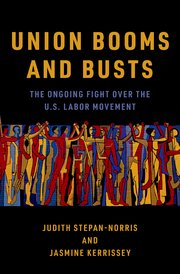
Union Booms and Busts: The Ongoing Fight Over the U.S. Labor Movement

Stepan-Norris, Judith and Jasmine Kerrisse. 2023. Union Booms and Busts: The Ongoing Fight Over the U.S. Labor Movement. Oxford University Press.

union booms and busts

The book is a comparative and historical analysis of the factors that helped or hindered workers in their attempts to build unions in the U.S.’s 11 basic industries, 1900-2015. For each industry, we analyze shifts in union power (union density), as affected by the state and macro context, replacement costs of workers, union and employer strategies, and the impact of employment, race, gender, and occupation.  

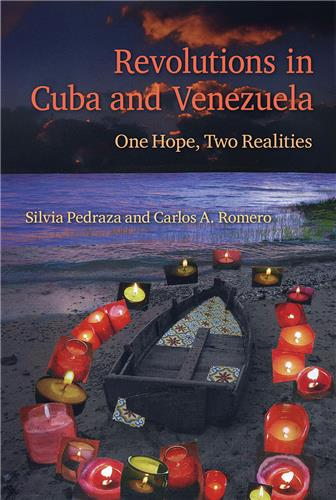
Revolutions in Cuba and Venezuela: One Hope, Two Realities

Pedraza, Silvia and Carlos A. Romero. 2023. Revolutions in Cuba and Venezuela: One Hope, Two Realities. University of Florida Press.

revolutions in cuba and venezuela

Revolutions in Cuba and Venezuela compares the sociopolitical processes behind two major revolutions-those of Cuba in 1959, when Fidel Castro came to power, and Venezuela in 1999, when Hugo Chávez won the presidential election. With special attention to the Cuba-Venezuela alliance, particularly in regards to foreign policy and the trade of doctors for oil, Silvia Pedraza and Carlos Romero show that the geopolitical theater where these events played out determined the dynamics and reach of the revolutions.
 
Updating and enriching the current understanding of the Cuban and Venezuelan revolutions, this study is unique in its focus on the massive exoduses they generated. Pedraza and Romero argue that this factor is crucial for comprehending a revolution’s capacity to succeed or fail. By externalizing dissent, refugees helped to consolidate the revolutions, but as the diasporas became significant political actors and the lifelines of each economy, they eventually served to undermine the social movements.
 
Using comparative historical analysis and data collected through fieldwork in Cuba and Venezuela, as well as from immigrant communities in the US, Pedraza and Romero discuss issues of politics, economics, migrations, authoritarianism, human rights, and democracy in two nations that hoped to make a better world through their revolutionary journeys.

Revolutions in Cuba and Venezuela: One Hope, Two Realities

revolutions

Pedraza, Silvia and Carlos A. Romero. 2022. Revolutions in Cuba and Venezuela: One Hope, Two Realities. University Press of Florida.

Revolutions in Cuba and Venezuela compares the sociopolitical processes behind two major revolutions—Cuba in 1959, when Fidel Castro came to power, and Venezuela in 1999, when Hugo Chávez won the presidential election. With special attention to the Cuba-Venezuela alliance, particularly in regards to foreign policy and the trade of doctors for oil, Silvia Pedraza and Carlos Romero show that the geopolitical theater where these events played out determined the dynamics and reach of the revolutions.
 
Updating and enriching the current understanding of the Cuban and Venezuelan revolutions, this study is unique in its focus on the massive exodus they generated. Pedraza and Romero argue that this factor is crucial for comprehending a revolution’s capacity to succeed or fail. By externalizing dissent, refugees helped to consolidate the revolutions, but as the diasporas became significant political actors and the lifelines of each economy, they eventually served to undermine the social movements.
 
Using comparative historical analysis and data collected through fieldwork in Cuba and Venezuela as well as from immigrant communities in the U.S., Pedraza and Romero discuss issues of politics, economics, migrations, authoritarianism, human rights, and democracy in two nations that hoped to make a better world through their revolutionary journeys. 

Max Weber’s Sociology of Civilizations: A Reconstruction

Kalberg, Stephen. 2021. Max Weber’s Sociology of Civilizations. Routledge.

Max Weber's Sociology of Civilizations

This volume examines civilizations through the broad lens articulated by the works of Max Weber. In focusing upon his comparative-historical mode of analysis and his causal explanations for the sources, contours, and trajectories of civilizations, this study reconstructs Weber’s sociology in a manner that provides clear guidelines to researchers seeking to investigate civilizations systematically. Through detailed interpretations of the West’s unique development from Antiquity to the Modern era, precise comparisons to the long-range and singular pathways taken by China and India, and careful demarcations of the “particular rationalisms” of several civilizations, the author addresses Weber’s powerful model-building on the one hand and his opposition to organic holism and structural presuppositions on the other hand. Both a broad-ranging conceptual framework and case-based empirical investigations are pivotal to Weber. His research strategy emphasizes further the “subjective meanings” of actors East and West and the deep cultural origins of groups. Finally, this volume masterfully conveys Weber’s contextual and multi-causal methodology rooted in a tight interweaving of the present with the past. Max Weber’s Sociology of Civilizations: A Reconstruction will appeal to comparative sociologists and historians, as well as to theorists of all persuasions. The social scientist pursuing a cross-civilizational agenda will here discover the distinct contribution of Weber’s “interpretive understanding” procedures to the now-essential field of civilizational analysis.