Janoski, Thomas. 2025. Rethinking Symbolic Interactionism: Edward Elgar Publishing.
This discerning book critically analyzes the key principles of symbolic interactionism, outlining their strengths and examining current weaknesses. Thomas Janoski provides novel insights into the theory, rethinking some of its foundations while adhering to its basic symbolic principles of the self.
Eiermann, Martin. 2025. The Limiting Principle: How Privacy Became a Public Issue: Columbia University Press.
The concept of privacy is central to public life in the United States. It is the fulcrum of countless conflicts over reproductive rights and consumer protection, the power of tech companies and the reach of state surveillance. How did privacy come to take on such import, and what have the consequences been for American institutions and society?
Martin Eiermann traces the transformation of privacy from a set of informal cultural norms into a potent political issue. Around the turn of the twentieth century, in a nation that was searching for order amid rapid change and frequent moral panics about the ills of modern life, privacy spoke to emerging social problems and new technological realities. During this tumultuous period, political mobilization and judicial contestation shaped a legal, institutional, and administrative privacy architecture that has partly endured into the twenty-first century. Eiermann rebuts the claim that technological change renders privacy obsolete, demonstrating that the concept became increasingly capacious when it was applied to the social problems and political disputes of the information age. And he shows that it is often the selectivity—not the ubiquity—of governmental and corporate data collection that should elicit our concerns.
Durham, Simone N and Angela Jones. 2025. Black Lives Matter: A Reference Handbook: Bloomsbury Publishing USA.
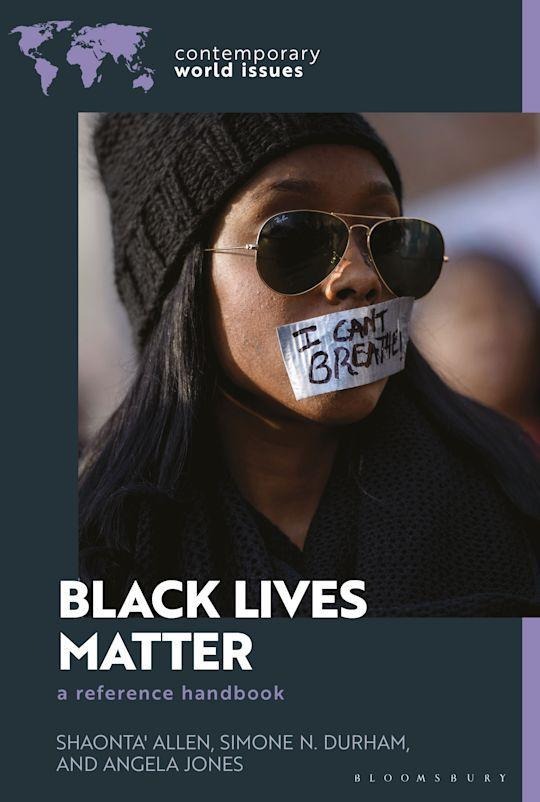
This multifaceted reference work surveys the history, development, leadership, and priorities of Black Lives Matter (BLM), including the group’s efforts to raise public awareness of police violence in communities of color.
Beginning with the infamous incidents of police brutality that spurred the creation and growth of BLM, this book goes on to profile leading and influential activists and organizations, such as the NAACP, movement co-founder Alicia Garza, and civil rights activist and athlete Colin Kaepernick.
Duina, Francesco and Luca Storti, eds. 2025. The Social Acceptance of Inequality: On the Logics of a More Unequal World: Oxford University Press. Retrieved 12/12/2025 (https://doi.org/10.1093/oso/9780197814499.001.0001).
The world has staggering levels of inequality. Most people worry about this. Some, however, accept or even approve of those inequalities. Why? The Social Acceptance of Inequality offers the first comprehensive analysis of the logics people use in support of economic inequalities. Turning to case studies from across the globe, it examines four primary logics. Market and economic logics see people accept and even approve of economic inequalities because of the positive material outcomes for societies with which they are purportedly associated. Moral logics see people thinking of inequalities as fair according to “higher” or ethical principles, such as meritocracy. When relying on cultural and institutional logics, people view economic inequalities as consistent with established or emerging outlooks, policies, or organizational arrangements. Using group and ethnic logics, people justify inequalities on the basis of hierarchical distinctions between “superior” and “inferior” collectivities. These logics do not exist in isolation: They often interact with each other and inevitably function in particular political, economic, and cultural contexts. With contributors from across the world and the social sciences, evidence comes from North and South America, Europe, and Asia. Attention goes not only to those in positions of privilege but also to those in vulnerable positions who, despite their conditions, look favorably on inequalities. With original analyses employing a wealth of methodological approaches, The Social Acceptance of Inequality offers a compelling investigation of the logics of acceptance, their variations and intersections, and how we may move toward a less unequal world.
Frederick, Angela. 2025. Disabled Power: A Storm, a Grid, and Embodied Harm in the Age of Disaster: NYU Press.
Every disaster is a disability disaster, argues Angela Frederick. Disabled Power tells the stories of Texans with disabilities who endured the 2021 Texas power crisis, which forced millions of Texas residents to endure a dayslong winter storm without heat or water. Based on 58 in-depth interviews with disabled Texans and parents of disabled children, Frederick highlights how disabled people and those with chronic health conditions are uniquely harmed when basic infrastructure such as power and water systems fail. She argues that the vulnerability people with disabilities experienced during this disaster was not an inevitable consequence of individual disabled bodies. Rather, disability vulnerability was “produced” by policies that “disabled” vital infrastructure.