The Social Acceptance of Inequality: On the Logics of a More Unequal World

Duina, Francesco and Luca Storti, eds. 2025. The Social Acceptance of Inequality: On the Logics of a More Unequal World: Oxford University Press. Retrieved 12/12/2025 (https://doi.org/10.1093/oso/9780197814499.001.0001).
The world has staggering levels of inequality. Most people worry about this. Some, however, accept or even approve of those inequalities. Why? The Social Acceptance of Inequality offers the first comprehensive analysis of the logics people use in support of economic inequalities. Turning to case studies from across the globe, it examines four primary logics. Market and economic logics see people accept and even approve of economic inequalities because of the positive material outcomes for societies with which they are purportedly associated. Moral logics see people thinking of inequalities as fair according to “higher” or ethical principles, such as meritocracy. When relying on cultural and institutional logics, people view economic inequalities as consistent with established or emerging outlooks, policies, or organizational arrangements. Using group and ethnic logics, people justify inequalities on the basis of hierarchical distinctions between “superior” and “inferior” collectivities. These logics do not exist in isolation: They often interact with each other and inevitably function in particular political, economic, and cultural contexts. With contributors from across the world and the social sciences, evidence comes from North and South America, Europe, and Asia. Attention goes not only to those in positions of privilege but also to those in vulnerable positions who, despite their conditions, look favorably on inequalities. With original analyses employing a wealth of methodological approaches, The Social Acceptance of Inequality offers a compelling investigation of the logics of acceptance, their variations and intersections, and how we may move toward a less unequal world.

Disabled Power: A Storm, a Grid, and Embodied Harm in the Age of Disaster

Frederick, Angela. 2025. Disabled Power: A Storm, a Grid, and Embodied Harm in the Age of Disaster: NYU Press.

Every disaster is a disability disaster, argues Angela Frederick. Disabled Power tells the stories of Texans with disabilities who endured the 2021 Texas power crisis, which forced millions of Texas residents to endure a dayslong winter storm without heat or water. Based on 58 in-depth interviews with disabled Texans and parents of disabled children, Frederick highlights how disabled people and those with chronic health conditions are uniquely harmed when basic infrastructure such as power and water systems fail. She argues that the vulnerability people with disabilities experienced during this disaster was not an inevitable consequence of individual disabled bodies. Rather, disability vulnerability was “produced” by policies that “disabled” vital infrastructure.

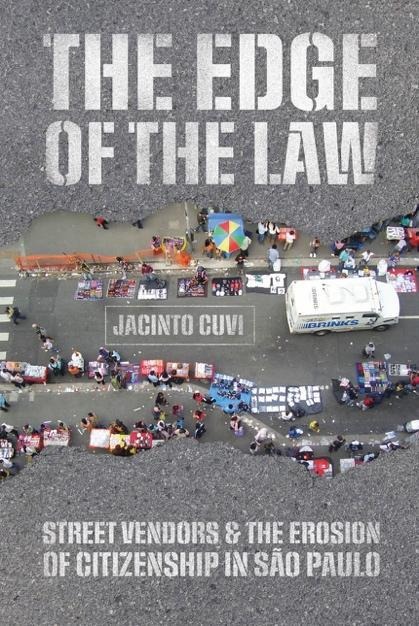
The Edge of the Law: Street Vendors and the Erosion of Citizenship in São Paulo

Cuvi, Jacinto. 2025. The Edge of the Law: Street Vendors and the Erosion of Citizenship in São Paulo: University of Chicago Press.

With a little initiative and very little startup money, an outgoing individual might sell you a number of delights and conveniences familiar to city dwellers—from cold water bottles while you’re sitting in traffic to a popsicle from a cart on a summer afternoon in the park. Such vendors form a significant share of the workforce in São Paulo, Brazil, but their ubiquity belies perpetual struggle. Some have the right to practice their trade; others do not. All of them strive to make it—or stay afloat.

Managing Corporate Virtue: The Politics of Workplace Diversity

Bereni, Laure. 2025. Managing Corporate Virtue: The Politics of Workplace Diversity in New
York and Paris: Oxford University Press.

A major tenet of contemporary capitalism holds that what is good for
business can align with what is good for society. Efforts toward more
diverse, equitable, and inclusive workplaces epitomize this rising
ideology, termed responsible capitalism. An increasingly common
managerial mantra is “diversity means business.” But how does it play
out in the daily life of organizations? Drawing on interviews with
diversity managers, a historical review of practitioner literature, and
observations from organizations in New York City and Paris,
Managing Corporate Virtue goes beyond the rhetoric of diversity
initiatives to uncover the concrete challenges faced by those tasked
with implementing them. This book reveals the persistent fragility of
diversity efforts, which are often sidelined; subject to the variations of the legal, social, and
political environment; and require constant efforts to sustain managerial support. Practitioners
must prove their programs are neither merely virtue signaling nor the Trojan horse of political,
legal, or moral pressures that would unsettle the corporate order. Ultimately, by exploring the
day-to-day work of diversity managers in the United States and France, the book exposes the
contradictions lurking beneath the neoliberal promise of harmony between profit and virtue.

One Sentiment, Multiple Interpretations: Contrasting Official and Popular Anti-Americanism in China

Zhang, Yinxian, and Di Zhou. 2025. “One Sentiment, Multiple Interpretations: Contrasting Official and Popular Anti-Americanism in China” Sociological Science 12: 511-536. https://sociologicalscience.com/articles-v12-22-511/

This study contrasts official and popular expressions of anti-Americanism in China by comparing narratives from People’s Daily and Zhihu between 2011 and 2022. Using computational and qualitative methods, we examined sentiment trends, topics, and opinions in official and popular discourses. We find that although both discourses have become increasingly negative toward the United States, they diverge significantly in specific expressions: official discourse mirrors Western liberal critiques of American social problems but attributes these issues to American democracy, whereas popular discourse blends left- and right-wing populism and blames liberal elites and capitalism for the American decline. These findings highlight both the limits of state control over public opinion and the pluralistic nature of nationalist expressions. The study also situates Chinese anti-Americanism within a global zeitgeist, discussing how populism transcends borders and shapes local political discourse in unexpected contexts.