Duina, Francesco and Luca Storti, eds. 2025. The Social Acceptance of Inequality: On the Logics of a More Unequal World: Oxford University Press. Retrieved 12/12/2025 (https://doi.org/10.1093/oso/9780197814499.001.0001).
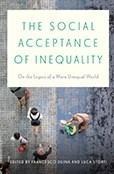
The world has staggering levels of inequality. Most people worry about this. Some, however, accept or even approve of those inequalities. Why? The Social Acceptance of Inequality offers the first comprehensive analysis of the logics people use in support of economic inequalities. Turning to case studies from across the globe, it examines four primary logics. Market and economic logics see people accept and even approve of economic inequalities because of the positive material outcomes for societies with which they are purportedly associated. Moral logics see people thinking of inequalities as fair according to “higher” or ethical principles, such as meritocracy. When relying on cultural and institutional logics, people view economic inequalities as consistent with established or emerging outlooks, policies, or organizational arrangements. Using group and ethnic logics, people justify inequalities on the basis of hierarchical distinctions between “superior” and “inferior” collectivities. These logics do not exist in isolation: They often interact with each other and inevitably function in particular political, economic, and cultural contexts. With contributors from across the world and the social sciences, evidence comes from North and South America, Europe, and Asia. Attention goes not only to those in positions of privilege but also to those in vulnerable positions who, despite their conditions, look favorably on inequalities. With original analyses employing a wealth of methodological approaches, The Social Acceptance of Inequality offers a compelling investigation of the logics of acceptance, their variations and intersections, and how we may move toward a less unequal world.