SocArXiv Symposium

SocArXiv will host the inaugural O3S: Open Scholarship for the Social Sciences symposium on October 26-27, 2017 at University of Maryland, College Park. We invite social science papers or presentations related to the following themes:

1. Research on any topic that includes open scholarship components. This may entail a demonstration case showing how to do an open scholarship project, providing data and code for results, working with collaborators, or other examples of open scholarship in practice.
2. Research about open scholarship itself. This may include mechanisms for making data and code public, workflow processes, publication considerations, citation metrics, or the tools and methods of open scholarship.
3. Research about replication and transparency. This includes both replication studies and research about replication and reproducibility issues.

Travel stipends of $1,000 will be available to a limited number of presenters. Submissions are due by June 1, 2017. Visit https://socy.umd.edu/centers/socarxiv-o3s-conference for details. Contact: socarxiv@gmail.com
New Book: Oxford Handbook of U.S. Women’s Social Movement Activism

McCamon, Holly, Verta Taylor, Jo Reger, and Rachel Einwohner (eds). 2017. The Oxford Handbook of U.S. Women’s Social Movement Activism. Oxford University Press.

Women in Global Science coverOver the course of thirty-seven chapters, including an editorial introduction, this handbook provides a comprehensive examination of scholarly research and knowledge on a variety of aspects of women’s collective activism in the United States, tracing both continuities and critical changes over time. Women have played pivotal and far-reaching roles in bringing about significant societal change, and women activists come from an array of different demographics, backgrounds and perspectives, including those that are radical, liberal, and conservative. The chapters in the handbook consider women’s activism in the interest of women themselves as well as actions done on behalf of other social groups.

2016 General Social Survey Data Available

The 1972-2016 General Social Survey cumulative file is now available on our website (http://gss.norc.org/). As of Wednesday April 5, it is also available on the GSS Data Explorer (https://gssdataexplorer.norc.org/).

New GSS Trends Feature: Already available on the GSS Data Explorer you will find the new GSS Key Trends feature.  This dynamic visualization function is designed to provide both researchers and the general public with unprecedented capacity to create graphic views of key trends and user responses over time.

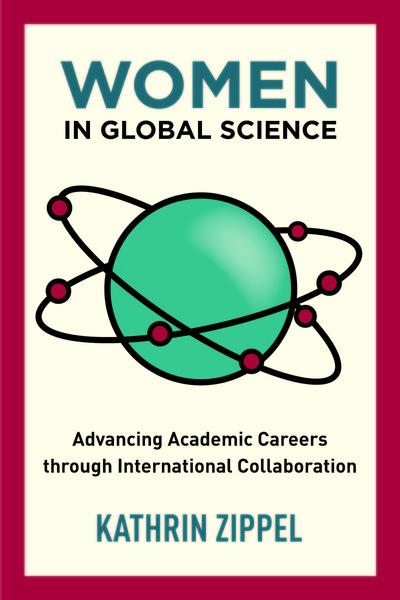
New Book: Women in Global Science

Kathrin, Zippel. 2017. Women in Global Science Advancing Academic Careers through International Collaboration. Stanford University Press.

Women in Global Science cover Scientific and engineering research is increasingly global, and international collaboration can be essential to academic success. Yet even as administrators and policymakers extol the benefits of global science, few recognize the diversity of international research collaborations and their participants, or take gendered inequalities into account. Women in Global Science is the first book to consider systematically the challenges and opportunities that the globalization of scientific work brings to U.S. academics, especially for women faculty.

New Book: Reparation and Reconciliation

Smith, Christi M. 2016. Reparation and Reconciliation: The Rise and Fall of Integrated Higher Education. University of North Carolina Press.

Reparations and Reconciliation cover This is the first book to reveal the nineteenth-century struggle for racial integration on U.S. college campuses. As the Civil War ended, the need to heal the scars of slavery, expand the middle class, and reunite the nation engendered a dramatic interest in higher education by policy makers, voluntary associations, and African Americans more broadly. Through a detailed analysis of archival and press data, Christi M. Smith demonstrates that pressures between organizations–including charities and foundations–and the emergent field of competitive higher education led to the differentiation and exclusion of African Americans, Appalachian whites, and white women from coeducational higher education and illuminates the actors and the strategies that led to the persistent salience of race over other social boundaries.